Send photos and rough sizes
Call or send a few pictures with the approximate height and length. That is usually enough to know whether it is worth a visit.
A retaining wall that is leaning, bulging, or losing soil out the back is telling you something about where water is going. All Around looks at the wall and the slope behind it, then talks through what it would take to put it right.
Retaining walls rarely fail all at once. A course of block creeps forward, a seam opens, soil washes through a gap after a hard rain, or the ground behind the wall starts to dish. By the time it is obvious from the driveway, the wall has usually been under pressure for a while.
Almost always the cause is water. Soil behind a wall soaks it up and gets heavier, and that weight has to go somewhere. If the water cannot drain away, pressure builds against the back of the wall until something gives. Rebuilding the same wall in the same spot without dealing with the water tends to buy time rather than fix the problem, which is why we want to see the slope, not just the stonework.
Depending on what we find, a project might mean taking a section down and rebuilding it, correcting the grade above so water stops loading the wall, adding a dirt blocker where soil keeps migrating, or handling erosion and yard drainage nearby so the repair holds. Often it is a combination, and it is worth pricing them together rather than one at a time.
Our retaining wall work is on the smaller side, the kind that holds a slope, tidies up a grade change, or keeps soil where it belongs. That covers a lot of Roanoke-area yards. If your wall is tall enough or loaded enough to need engineered design, we would rather tell you that at the estimate than take it on and hope. Send the rough height and length and we will give you a straight answer.
Roanoke, VA · June 2026
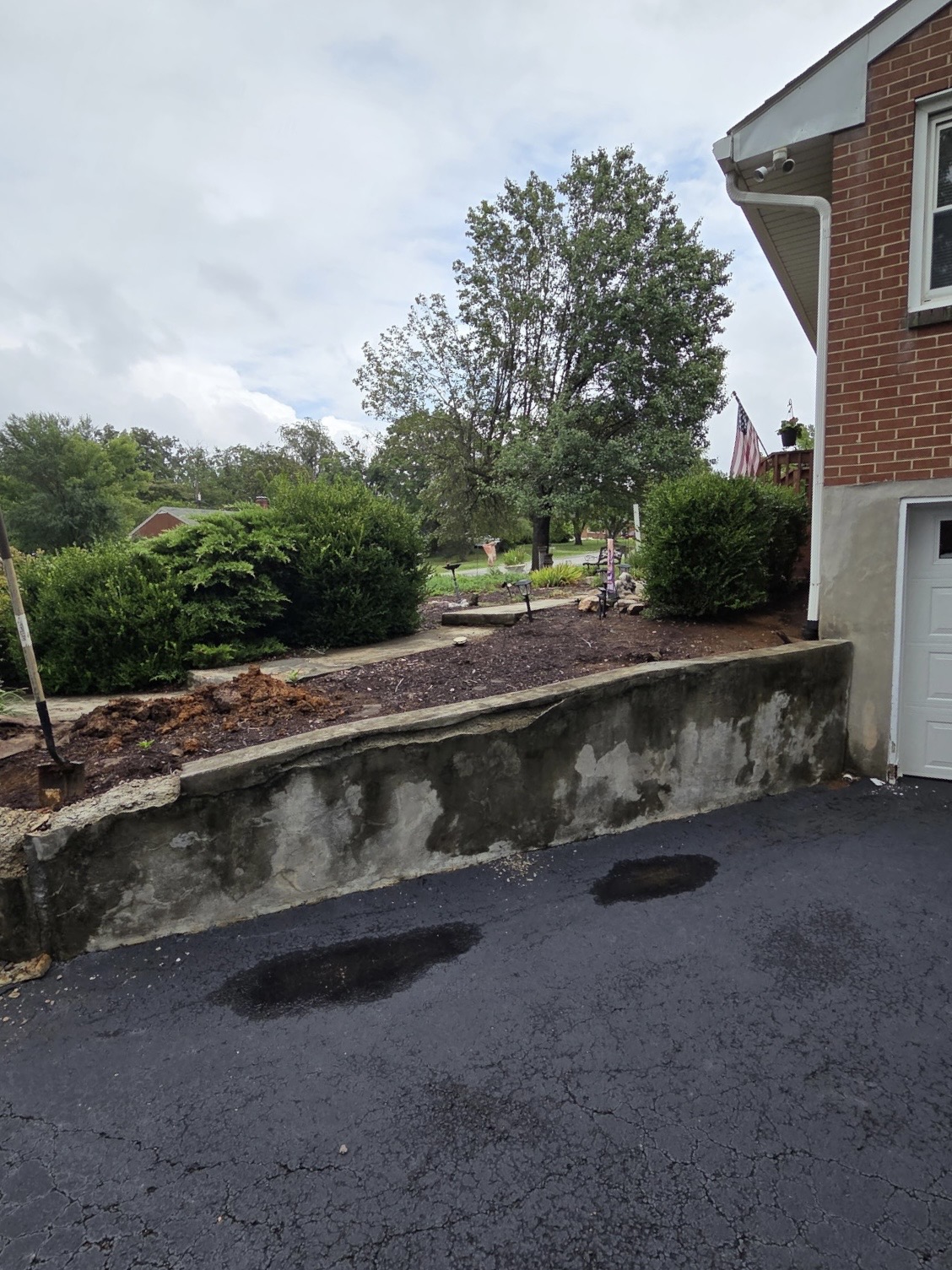
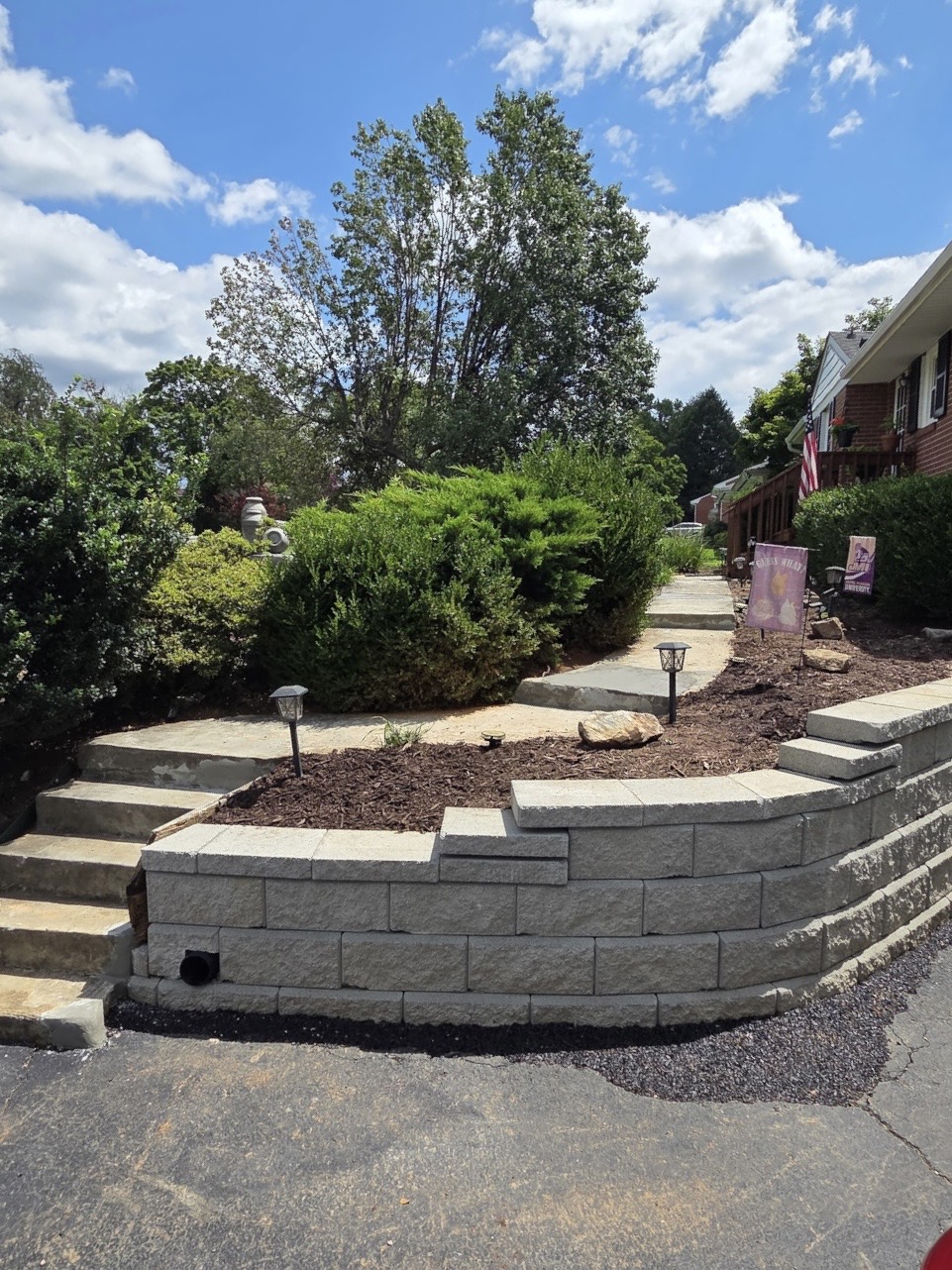
The wall along this driveway had been failing for a while. The stucco face was cracking and flaking off in patches, which is what the homeowner could see. The actual problem was behind it: the original molded concrete wall had been built without proper drainage, so every season the water soaked into the bank and had nowhere to go.
That is what destroys a wall. Wet clay is heavy, and heavy soil pushes. Given long enough it wins, and the wall either cracks, leans, or starts letting the bank through. It also means water sits trapped against the structure right where the wall meets the house, working on the foundation season after season. Repointing the face or patching the stucco would not have touched any of that.
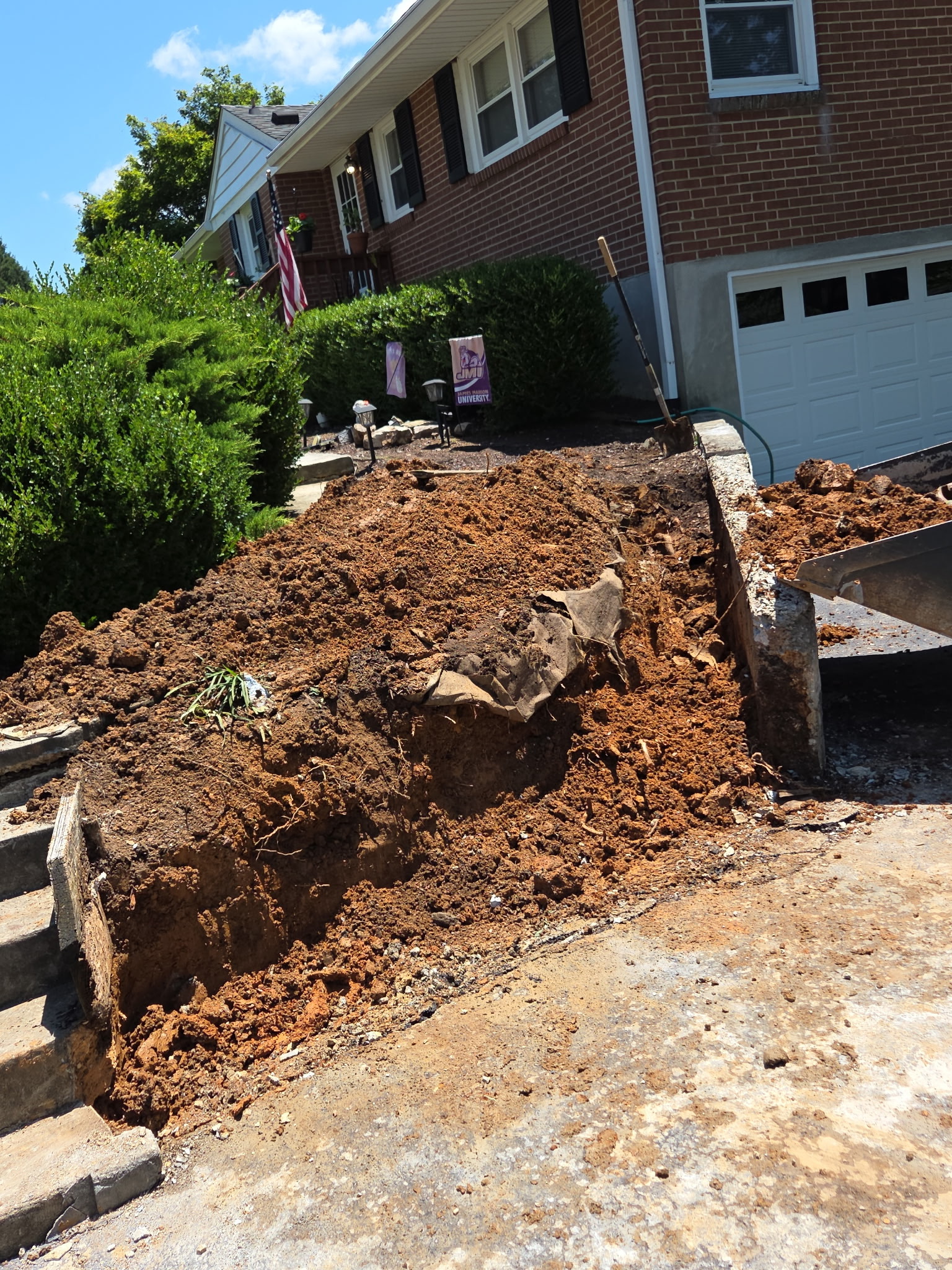
So the wall came out. All of it, cut into sections and hauled away, down to the bare clay bank it had been holding back.
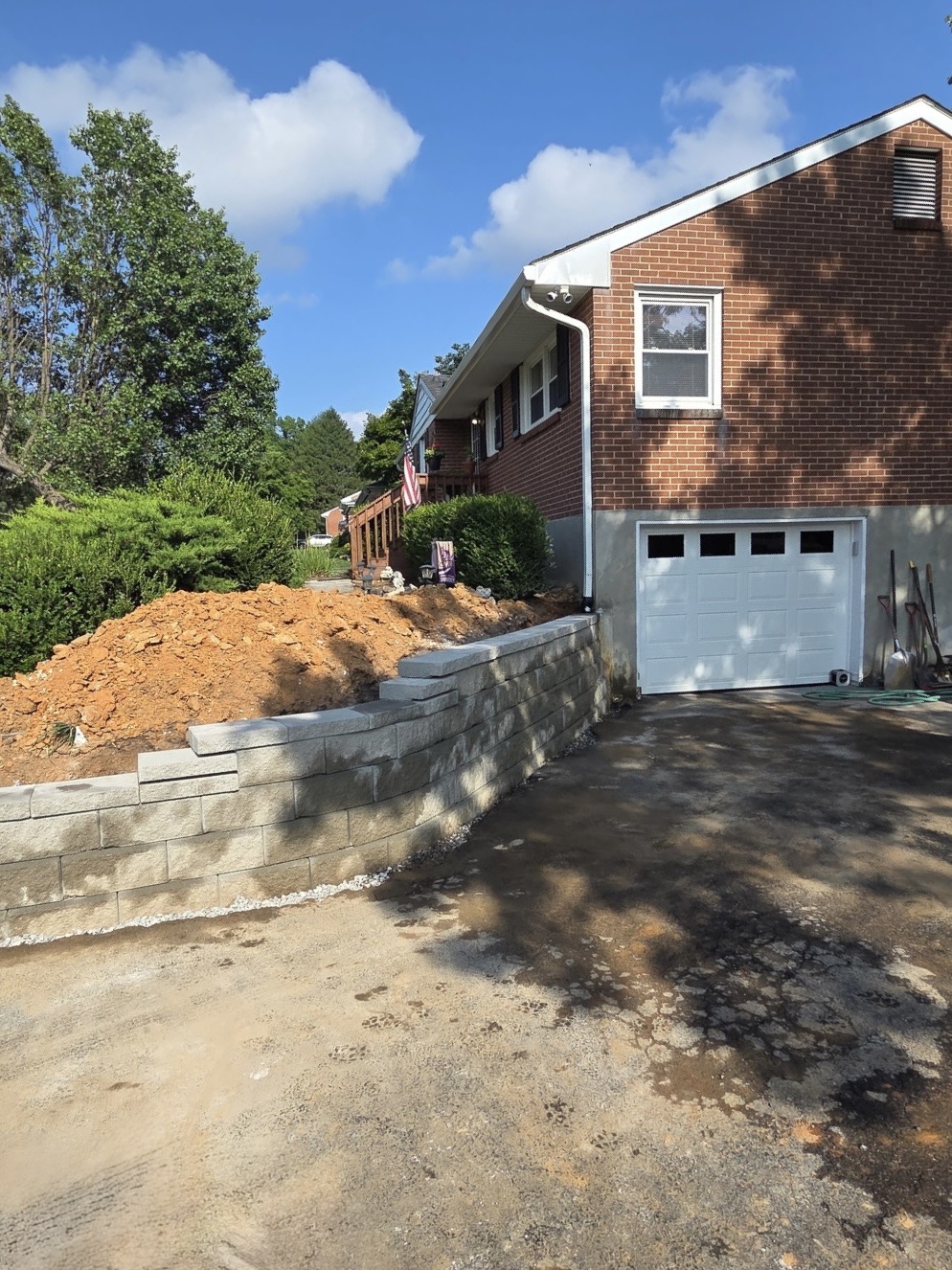
The rebuild went in as segmental retaining block, capped along the top and stepped to follow the fall of the driveway. The part that matters most is the part you can barely see: drainage pipes and a proper outlet, planned in from the start rather than added as an afterthought. Water that gets into the bank now has a route out, instead of collecting behind the wall and against the foundation.
Once the wall was up and backfilled, the bed above it was regraded, remulched and replanted, and the landscape lighting reset. The driveway was swept clean at every stage.
No obligation to move forward after the estimate.
Call or send a few pictures with the approximate height and length. That is usually enough to know whether it is worth a visit.
We walk the wall and the ground above it, look at where water goes, and confirm whether the work fits what we do.
You get a clear recommendation covering the wall, the grading or drainage around it, and what we would leave alone.
We schedule the work, rebuild the section, sort out the water, and tidy the surrounding ground when we are done.
Grading, runoff, and erosion get assessed alongside the wall, because that is usually what moved it.
Regrading, a patio, a walkway, or replanting the disturbed ground can be handled in the same project rather than by a second contractor.
If the wall is beyond the scale we work at, we say so at the estimate instead of finding out halfway through.
It depends on how far it has moved and why. A wall that has shifted slightly for a fixable reason is a different job from one that is bulging along its length. We look at the wall, the slope above it, and where the water is going before saying which it is.
Usually water. Soil holds water, water makes the soil heavier, and that weight pushes on the wall. If the water has nowhere to go, pressure builds until something moves. That is why we look at grading and drainage rather than only the wall itself.
Our retaining wall work is on the smaller side, the kind that holds a slope, tidies a grade change, or keeps soil where it belongs. Tell us the rough height and length and we will say plainly whether it fits what we do or whether you need a specialist.
Yes, and it is usually the part that matters most. Grading, resloping, yard drainage, erosion control, and dirt blockers can all be part of the same estimate, because rebuilding a wall without addressing the water tends to buy you time rather than a fix.
Yes. All Around offers free, no-pressure estimates. Call (540) 537-6163 or send details and photos and we will talk through the scope.
We serve Roanoke, Salem, Vinton, Blue Ridge, Hardy, Moneta, Elliston, and nearby communities.
Tell us what it is doing and roughly how big it is. We will look at the wall, the slope, and the water, and give you a straight answer on what it needs.